
DQ200 mechatronics and DSG 7 clutch repair: symptoms and diagnostics
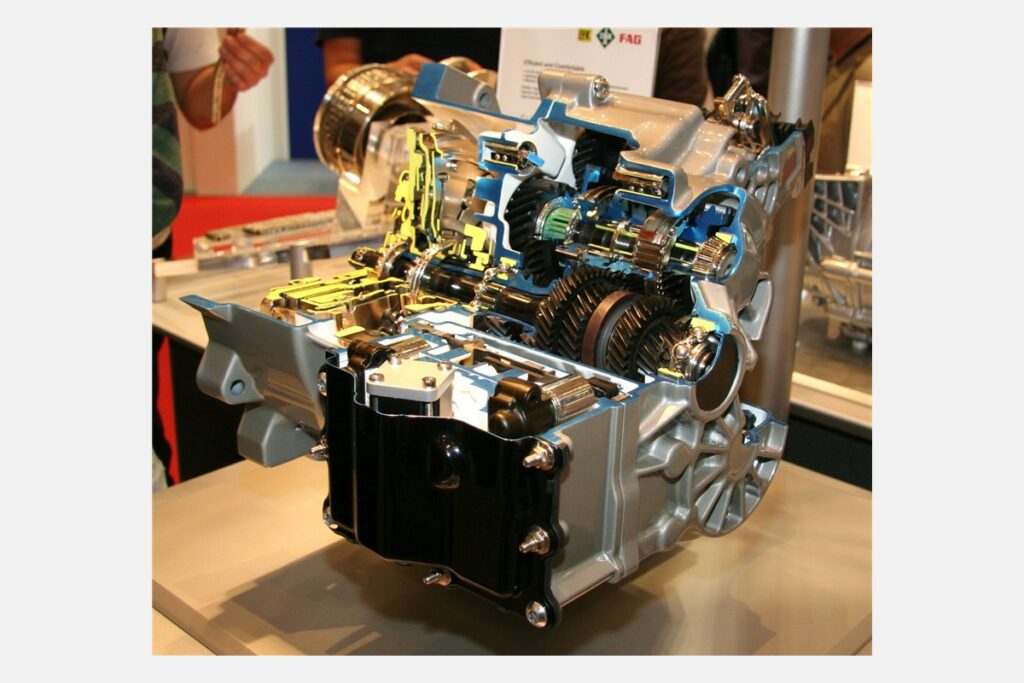
The DQ200 (also known as the 0AM, 0CW or DSG 7) is a seven-speed dual-clutch transmission with dry clutches, common in VW, Škoda, SEAT and Audi models with smaller engines. In Poland it comes into workshops very often: there are a lot of these cars, and the faults repeat in a predictable pattern.
This article covers the DQ200 only: the mechatronics, the clutches and the pump. A general overview of the DSG family is in a separate article; here we focus on diagnostics and the repair decision.
What the mechatronics in the DQ200 is
The mechatronics is the control assembly: the TCM, valves, sensors, an electric oil pump and a pressure accumulator. It has its own oil sump, separate from the gearbox oil. The oil in the mechatronics cools the electronics and drives the clutch and shift fork actuators. The gearbox has a second, independent oil circuit that lubricates its mechanical parts.
An oil change uses two types of fluid. The mechanical part is filled with oil, and the mechatronics gets a dedicated hydraulic fluid. Each part is filled to the manufacturer's specification.
Symptoms: mechatronics, clutch or something else?
A flashing PRNDS selector display usually means the control unit is in limp mode. Other symptoms include:
- no drive, or drive in one direction only,
- no reverse while the forward gears work,
- jerking, slipping and vibration when pulling away,
- rattling or knocking (often the dual-mass flywheel or the clutch).
The mechatronics more often causes pressure and electronic problems: pressure drops at idle, an overheating pump, fault codes related to pressure and communication.
Dry clutches wear like a conventional clutch, especially in town. Under hard use people talk about tens of thousands of kilometres, and with calm driving on longer trips they last longer. Symptoms are slipping under acceleration, a burning smell and judder when pulling away, while hydraulic pressure stays fairly stable.
A sudden loss of reverse can be caused by the 6/R shift fork rather than the whole mechatronics unit.
Typical DQ200 faults we see in practice
Cracked housing at the pressure accumulator
The most common mechanical weak point of the mechatronics: the aluminium housing around the accumulator works under very high pressure, in the order of tens of bar. Over time it cracks and oil leaks internally. At first the driver may not feel a clear difference; the drop shows up in diagnostic scan tool data, in the accumulator pressure readings at idle.
A safety note: the accumulator holds inert gas under pressure. Removing the mechatronics cover without the depressurising procedure is dangerous. In the workshop we treat the assembly as pressurised until we confirm otherwise.
TCM and pump
The weakest point of the first seven-speed DSG versions was faulty electronics; even after updates the control unit fails from overheating. A common scenario is a leak or a crack that makes the pump run too long, so the power track on the circuit board overheats. Cracked solder joints on the CAN bus and the pump power supply and connector problems add to that.
Clutches and clearance setup
Replacing the clutches requires special tools and correct K1 and K2 clearance setup. Wrong spacer shims cause dragging, jerking or clutches that do not engage. There are two generations of clutch kits (the change came roughly at the turn of July and August 2011) and they are not interchangeable, so the VIN is needed to order parts.
Diagnostics at ASB Długołęka
- Interview and test drive: when it jerks, when a gear is missing, whether PRNDS flashes.
- Reading fault codes and data with a diagnostic scan tool: mechatronics pressure, pump operation, clutch adaptations.
- Checking for software updates. Some symptoms are fixed by calibration, without disassembly.
- Checking for leaks, the oil condition in both sumps, the dual-mass flywheel and engine ancillaries. An engine that runs rough wears out the dual-mass flywheel and the clutches.
- Only then the decision: mechatronics rebuild, control unit, clutches, shift forks or a full transmission repair.
Fault codes such as P17BF, P189C or P0841 are diagnostic clues, not a verdict to "replace everything". What matters is telling apart a hydraulic leak, clutch plate wear and a shift fork problem.
Repair: how we set the scope
The scope varies from a mechatronics rebuild (housing, accumulator, valves, control unit), through clutch replacement with correct setup, to a full transmission rebuild. The same code can mean three different solutions, so the quote always comes after diagnostics.
Want a quote? Write to us through the contact form. We reply once we have a short description of the symptoms and the VIN. Quote after diagnostics.
Automatic transmission repair Wrocław · Diagnostics
Adaptations and driving after the repair
After clutch or mechatronics replacement, the DQ200 needs the correct adaptation procedure. Without it the car can jerk even with good parts. We give customers advice for the first kilometres: no aggressive starts, and time for the clutch plates to bed in according to the workshop procedure.
What not to mistake for a transmission fault
- damaged engine and gearbox mounts, which cause vibration when pulling away,
- engine problems (ignition, intake), whose jerking is easy to blame on the transmission,
- wrong oil level or quality in the mechatronics, if the version has a separate circuit.
When to come in early
The first slight jerks in traffic, new clutch fault codes or growing noise are the time for diagnostics, before the actuators get damaged or the clutch plates wear down to nothing.
Frequently asked questions
How do I get a quote for a DQ200 mechatronics rebuild?
After diagnostics, or after you describe the symptoms and give the VIN in the form.
How is a mechatronics fault different from a worn clutch?
Mechatronics: pressure, electronics, limp mode, and often the car drives one moment and not the next. Clutch: slipping, judder when pulling away, a burning smell, while the hydraulics work fairly steadily.
What do the codes P17BF, P189C and P0841 mean?
They are fault codes related to pressure, hydraulics and sensors in the DQ200 control system. On their own they do not point to a single part; data from a diagnostic scan tool and an inspection are needed.
Can you drive with faulty DQ200 mechatronics?
You can get to the workshop, but you risk finishing off the pump and the control unit and leaving the car immobilised. If the transmission is in limp mode and pressure is dropping, do not put off the visit.
When is an adaptation enough, and when is disassembly needed?
After an oil change, a clutch replacement or a software update, adaptations are mandatory. An adaptation alone will not fix a cracked housing or burnt tracks on the control unit.
Summary
The DQ200 can be repaired sensibly when the problem is diagnosed properly. At ASB we do this near Wrocław, in Długołęka: diagnostics first, then a specific repair proposal.