
Ford PowerShift DPS6: dry clutches, symptoms and repair
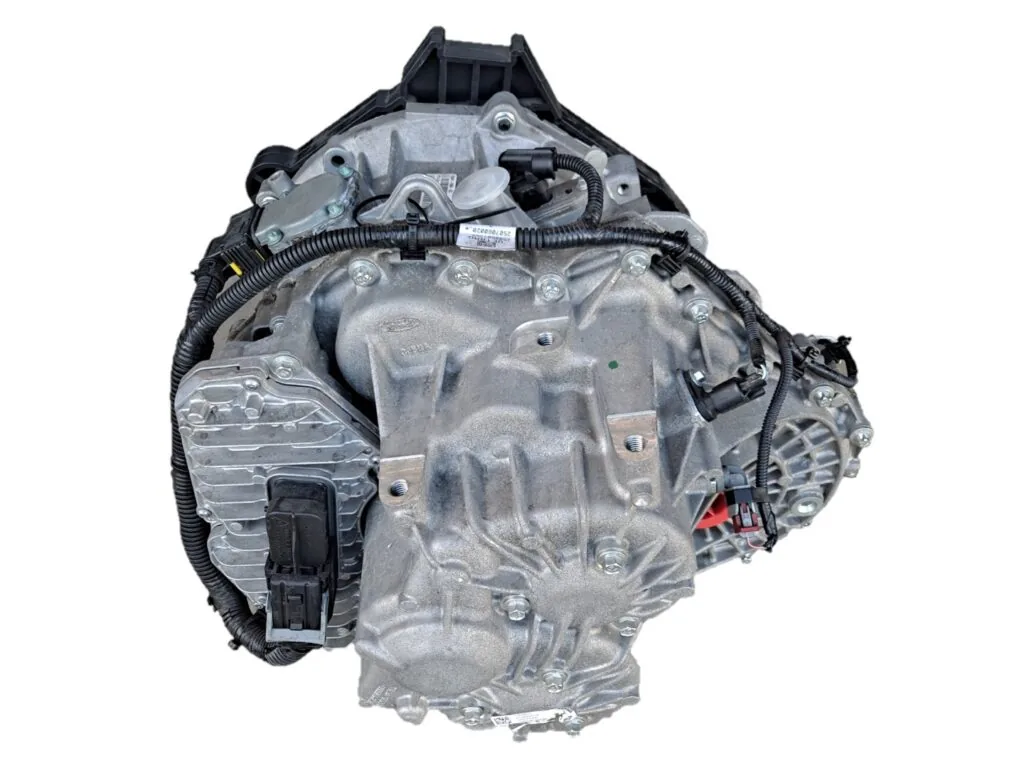
The PowerShift DPS6 (designation 6DCT250) is Ford's dry dual-clutch transmission, used among others in the Focus, Fiesta and Renault Clio. City driving, traffic jams and pulling away uphill put a heavy load on the dry clutch plates. This article is about the DPS6 only. Do not confuse it with the VAG group DQ200 (we have a separate article on it) or with the wet PowerShift versions in larger Fords.
How the DPS6 works (in brief)
It is two manual gearboxes in one case, switched by the dry clutches K1 and K2 and controlled by mechatronics with actuators. There is no conventional torque converter. How smoothly it runs depends on clutch temperature, software and correct adaptations.
Symptoms customers come in with
- judder and vibration when pulling away,
- slipping and loss of power when accelerating,
- noise or rattling around the transmission,
- delayed response or hesitation during a gear change,
- limp mode, a warning light, clutch or actuator fault codes,
- symptoms getting worse in traffic as the clutches heat up.
Clutches or mechatronics?
Dry clutches wear like conventional ones: slipping, a burning smell, judder when pulling away, while the electronics work fairly steadily. Their life depends heavily on driving style, and city driving wears them out faster than longer trips.
Mechatronics and actuators can cause jerking while the clutch plates are still good. They set different fault codes and need a different repair approach. A software update and a new adaptation often help, but not when the clutch plates are burnt or an actuator is mechanically damaged.
At ASB we do not replace the clutch kit "just in case". First comes a scan, a drive and a condition check, then we set the scope of work.
Diagnostics step by step
- Interview: when it jerks, whether the car spends a lot of time in traffic, whether it has been serviced before.
- Reading fault codes and data with a diagnostic scan tool: temperature, adaptations, actuator positions.
- Checking for software updates.
- Assessing the clutches and actuators, after removal if needed.
- Repair proposal and a quote after diagnostics.
Repair: typical routes
- update and adaptations, when the electronics and the clutch plates allow it,
- clutch replacement with correct setup,
- repair or replacement of the actuators or the mechatronics,
- a wider scope when secondary damage has occurred.
Want a quote? Write to us through the contact form: give the VIN, the model (Focus, Fiesta) and a short description of the symptoms.
Transmission repair Wrocław · Diagnostics · DQ200 (separate topic, VAG group)
Frequently asked questions
How is the PowerShift DPS6 different from a conventional automatic?
It is a dual-clutch transmission with dry clutches. A conventional automatic uses planetary gearsets and a torque converter.
Do the clutches always have to be replaced?
No. We start by diagnosing the actuators, the software and the condition of the clutch plates.
Is the DPS6 the same as the DQ200?
No. It comes from a different manufacturer and has its own mechatronics and procedures, which is why we cover them separately.
How do I get a quote?
Through the form or after a diagnostic check at our workshop.