
Ford 6F35: common failures, symptoms and rebuild
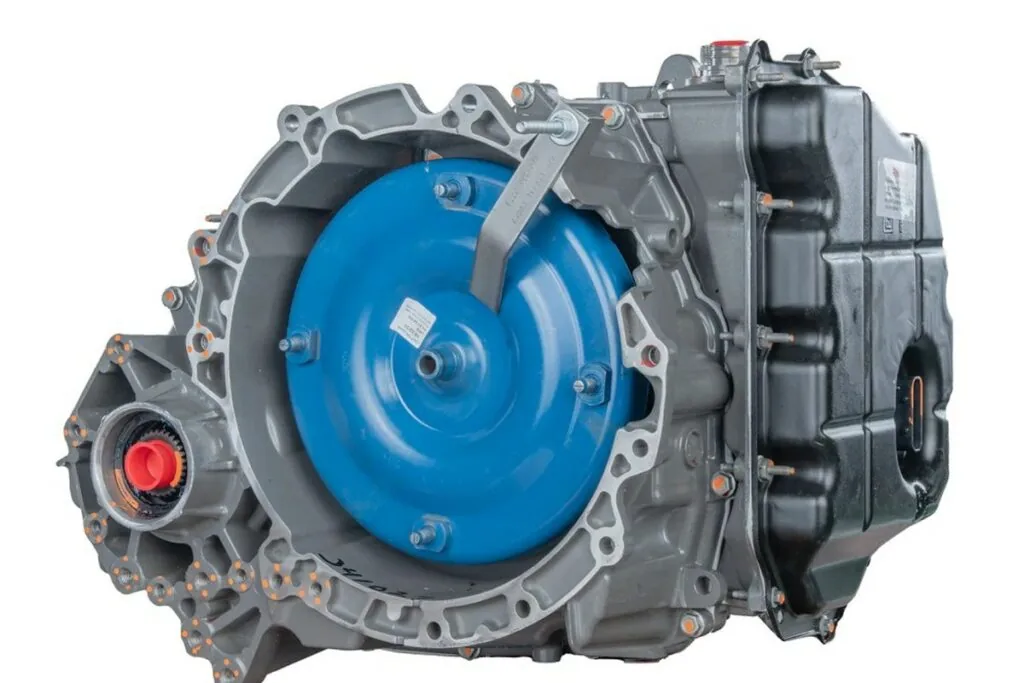
The 6F35 is Ford's six-speed automatic for front-wheel drive, developed together with GM (close in design to the 6T40). In Poland it most often comes to us from the Focus, Kuga and Mondeo and from their market versions, the Escape and Fusion. We cover the Ford Edge with the newer 8F35/8F24 family separately, because it is a different design.
Many units have already had a first or second rebuild. Some symptoms are obvious, others only show up now and then. Before you blame the transmission, it is worth ruling out causes outside it. After that we look at what usually fails inside and how a job goes at ASB.
Before you blame the transmission
Most problems concern shift quality. Before we remove the transmission, we check the things that can imitate a 6F35 fault:
- fault codes in every control unit, the TCM included,
- the battery and charging,
- engine condition: oil, idle, air filter, mass airflow sensor (MAF),
- tyre pressure and size,
- Mercon LV fluid level and condition.
A dirty air filter or a faulty airflow sensor can cause harsh shifts and harsh engagement into P, R and D, because they affect fuelling and the transmission responds more sharply. After replacing the airflow sensor or the filters, a keep alive memory (KAM) reset is mandatory.
A diagnostic drive with a scan tool shows whether the problem is in the transmission, in the torque converter lock-up or outside the transmission.
The most common symptoms for the driver
- no reverse or a very weak reverse,
- slipping in the higher gears,
- jerking or shudder when the torque converter locks up,
- harsh 1-2, 2-3 or 3-2 shifts,
- a bang on the 1-2 shift,
- limp mode and fault codes for slip, pressure or valves,
- symptoms getting worse once the transmission is hot.
What most often fails inside
Valve body and valves
The aluminium valve body wears with mileage. In the 6F35 the most sensitive parts are the solenoid pressure regulator, the TCC regulator, the control pressure regulator and the clutch regulator spools. Worn bores give harsh or floating shifts. During a rebuild we decide whether the valve body can be saved with a repair kit for the right generation or has to be replaced.
One-way clutch and the bang on the 1-2 shift
The 1-2 shift is non-synchronous: the one-way clutch holds, then the 2-4 clutch applies. A worn one-way clutch can lock for a moment on the 1-2 shift and feel like a bang. After a failure that leaves a lot of metal particles, this is the part that fails most often, so we check it by hand once the unit is apart.
Bushings
Bushings for the sun gear, the stator, the 4-5-6 clutch drum and the half shaft. With too much clearance, pressure in the balance circuit drops and shifts turn harsh, often worse when hot. In a full rebuild we measure bushing clearance instead of judging it by eye.
Differential and the bearing seat in the case
Over time the differential bearing seat in one half of the case wears; it looks as if someone had machined it. Factory clearance is anywhere from a few to a dozen or so thousandths of an inch. The manufacturer specifies replacing that half of the case, and aftermarket repair kits with shims are available.
Dowel pins and the crankshaft pilot (2.0 engine)
On the 2.0 engine, missing dowel pins when the transmission is fitted, or after an engine swap, bend the converter pilot, wear out the pilot bore in the crankshaft and destroy the flexplate. A replacement transmission will fail again unless the engine is repaired. When we remove the unit, we always check the pilot and whether the dowel pins are in place.
Torque converter and fluid
Lock-up shudder, metal particles in the pan and overheated fluid often end with a converter rebuild together with the transmission.
Generations and fluid
There are two main generations of the 6F35 (roughly 2009-2012 and from 2013). Valve body parts and software are not interchangeable, so we ask for the VIN when quoting. The fluid is Mercon LV. Conventional ATF often leads to problems with the converter lock-up and the valves.
How we work at ASB
- Interview and a drive with the scan tool.
- Checking the fluid, the pan, fault codes and things outside the transmission: the airflow sensor, the battery, the tyres.
- Decision: fluid service, valve body, torque converter or a full rebuild with a check of the bushings and the one-way clutch.
- Quote after diagnostics.
Want a quote? Write to us through the contact form. The VIN, the model (Focus, Kuga, Mondeo) and a short description are enough: when it jerks, whether reverse disappears, whether the symptom appears when hot.
Automatic transmission repair Wrocław · Diagnostics · Ford 8F35/8F24 (separate topic)
Frequently asked questions
What are the most common 6F35 problems?
Shift quality, loss of reverse, jerking when the converter locks up, valve body and bushing wear, and the effects of old fluid.
Why does the 6F35 lose reverse?
Because of worn hydraulics and clutch plates, and metal particles. We confirm it with diagnostics instead of guessing from a single code.
Is a Mercon LV fluid change enough?
Yes, as long as there is no mechanical damage yet. With metal particles in the pan or a missing gear, a fluid change alone comes too late.
How is the 6F35 different from the 8F35?
It is a different generation and a different design, which is why the Edge with the 8F35 is covered in a separate article.
How do I get a quote?
Through the form or after a diagnostic check at our workshop.