
Water in ATF: flooded automatic transmission, symptoms, risks and what to do
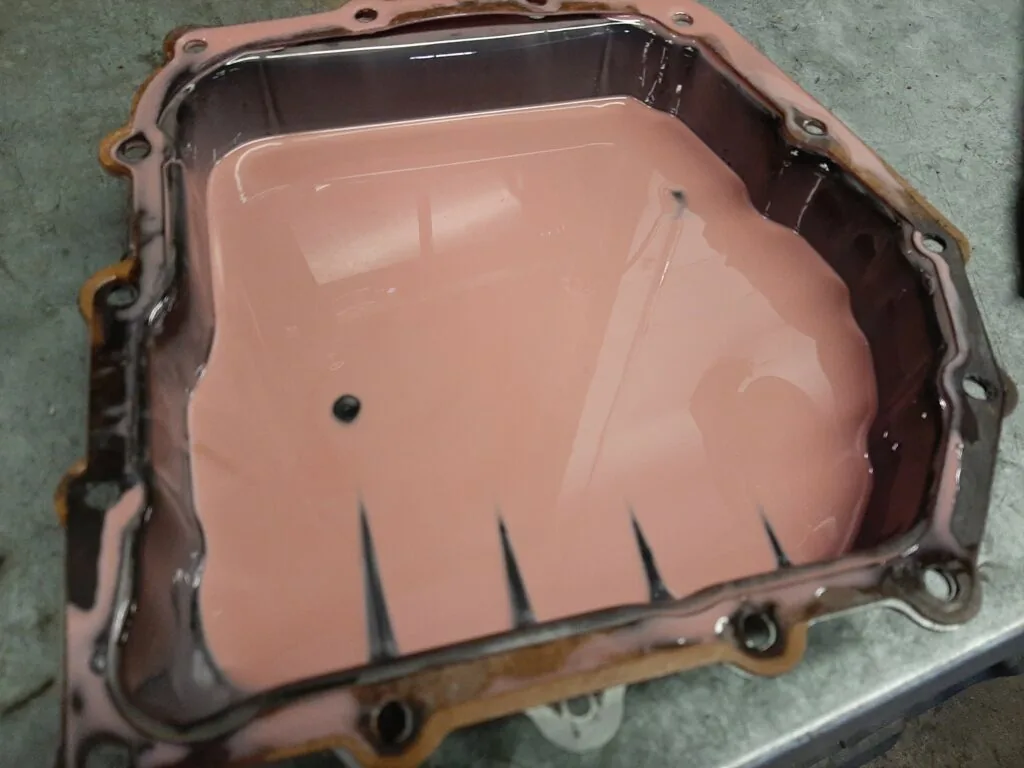
Water or coolant in the ATF is one of the worst things that can happen to an automatic transmission. Glycol from the coolant destroys the clutch plates, valves and electronics. The longer you keep driving because "it still goes", the more likely a limited repair turns into a full rebuild.
How water gets into the ATF
- a leaking transmission oil cooler (often a heat exchanger inside the main radiator),
- flooding after driving through deep water, or pressure washing in the wrong place,
- service mistakes: a wrong connection, unsealed connectors.
Symptoms
- milky, pink or latte-coloured fluid instead of clear red or green fluid,
- foaming and a smell of wet oil,
- jerking, slipping, delayed engagement,
- pressure, slip or mechatronics fault codes,
- in extreme cases no drive and limp mode.
What not to do
- do not keep driving for another week: water damages the clutch plates and valve seats very quickly,
- do not stop at a single fluid change without finding the source, which is most often the cooler,
- do not ignore glycol in the transmission, even if the car still moves off.
What we do at ASB
- Checking the colour and condition of the fluid, the pan and the filter.
- Finding the source: a pressure test of the cooling system and the heat exchanger, checking for leaks.
- Deciding on the scope: flushing with new fluid and a filter, or opening the transmission and the mechatronics and rebuilding them after longer driving with glycol leaking in.
- Removing the cause, often the heat exchanger or the radiator. Otherwise the problem comes back.
Why a fluid change alone is often not enough
Water damages paper clutch linings and seals. Even after several ATF changes, contamination stays in the valves and passages. After longer driving with glycol or water in the fluid, the transmission has to come apart, the clutch plate sets have to be replaced and the mechatronics rebuilt.
Suspect water in your ATF? Write to us through the contact form: give the VIN, attach a photo of the pan or the fluid if you have one, and tell us whether the car recently drove through water or was losing coolant.
Diagnostics · Transmission repair Wrocław · Torque converter
Frequently asked questions
How can you tell there is water in the ATF without disassembly?
By the colour and consistency on the dipstick or after draining, sometimes by the smell. Removing the oil pan usually confirms it.
Is a fluid change enough?
Only when it is caught very early and the source has been fixed. A wider scope is often needed.
Can I drive to the workshop?
Take the shortest route at low revs. Do not heat up the transmission by driving on the motorway.
How do I get a quote?
Through the form. The more details you give (VIN, a photo of the fluid), the faster we can reply.